Trust Foundations
A 10-Part Plain-English Guide to Understanding Trusts
Welcome
Welcome to Trust Foundations, a 10-part plain-English guide designed to help you understand trusts and how they can be used in estate planning.
Whether you're considering creating a trust, updating an existing trust, or simply trying to understand how trusts work, you've come to the right place.
This Learning Center was designed for people—not lawyers. You do not need any legal background. Each article builds on the previous one, explaining one concept at a time in straightforward, easy-to-understand language.
Why This Learning Center Exists
Trusts are among the most misunderstood estate planning tools. Many people believe trusts are only for wealthy families or that every trust avoids taxes or replaces a will. This series explains what trusts can—and cannot—do so you can make informed decisions before meeting with an attorney.
By the time you complete the Foundations Series, you will understand:
What a trust is—and what it is not.
Why people create trusts.
How revocable and irrevocable trusts differ.
How trusts work during life, incapacity, and after death.
The role of trustees and successor trustees.
Why funding a trust is essential.
The practical considerations involved in deciding whether a trust is right for you.
Start with the Foundations Series
See the Big Picture
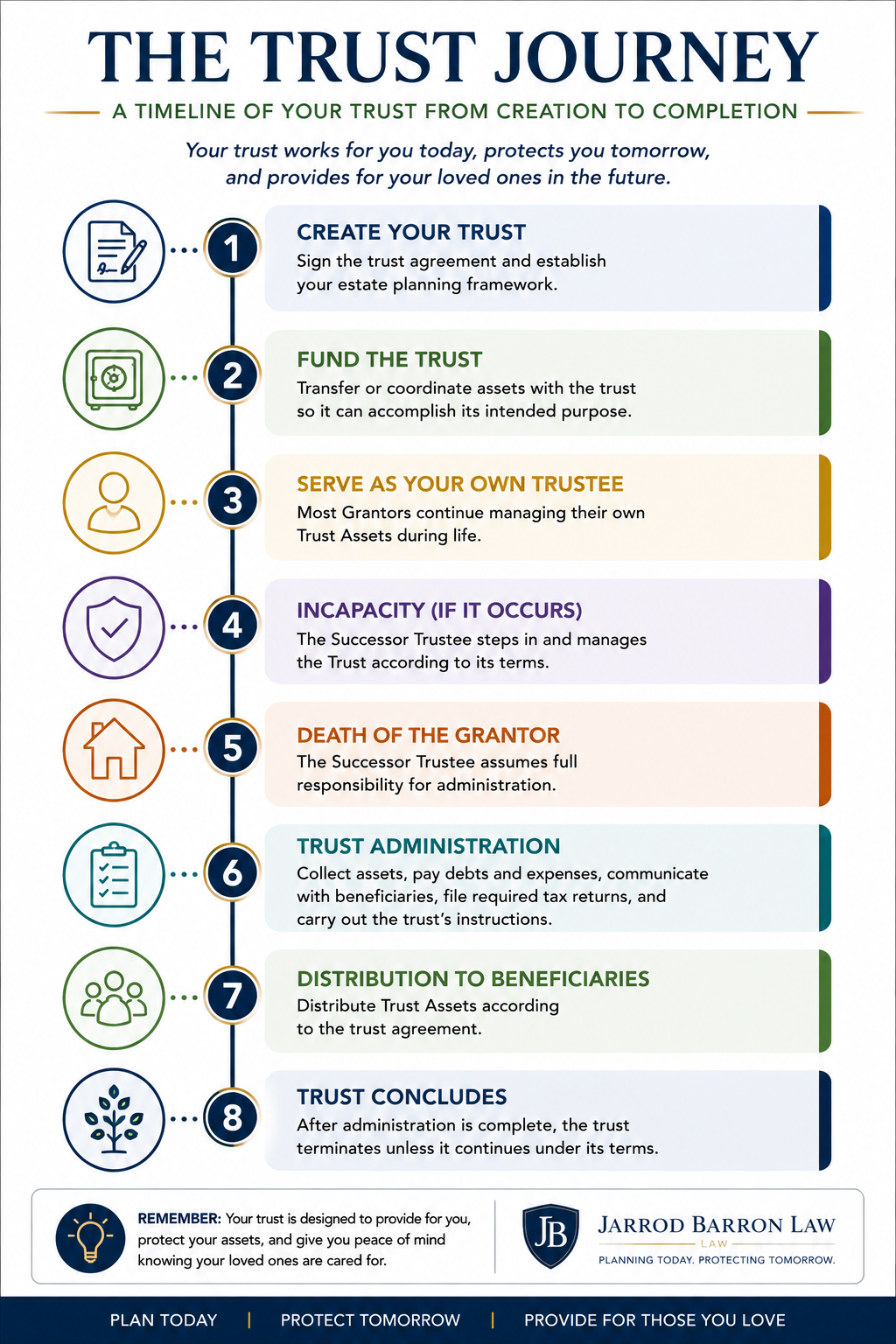
Before or after reading the series, review the Trust Timeline. It visually illustrates how trusts function during life, incapacity, and after death, and how trustees, successor trustees, beneficiaries, and trust administration fit together.
How Long Will It Take?
Most readers complete the entire Foundations Series in approximately 45–60 minutes. Each article can be read independently, but reading them in order provides the clearest understanding of how the concepts fit together.
A Few Things to Keep in Mind
Every person's situation is different.
Not everyone needs a trust.
A trust is only one part of a comprehensive estate plan.
A trust only controls assets that are properly transferred into it.
Good planning begins with understanding your options.
What Comes Next?
Special Needs Trusts
Charitable Trusts
Certificates of Trust
Trust Administration
Probate Administration
Estate Planning for Parents
Estate Planning for Business Owners
Asset Protection
Tax Planning
And many more.
Ready to Begin?
The first step in deciding whether a trust is right for you is not signing legal documents—it's understanding your options.
Begin with Article 1 — What Is a Trust?, then work through the series one topic at a time.
About Jarrod Barron Law
Jarrod Barron Law helps Michigan individuals, families, and business owners make informed legal decisions through thoughtful, plain-English estate planning.
Disclaimer
The information provided in this Learning Center is for general educational purposes only. It is not legal advice and does not create an attorney-client relationship. Every legal matter is unique, and you should consult an attorney regarding your specific circumstances.